
WE STRIP DOWN CENTRIFUGAL pumps AND REBUILD THEM PROPERLy
Contact Us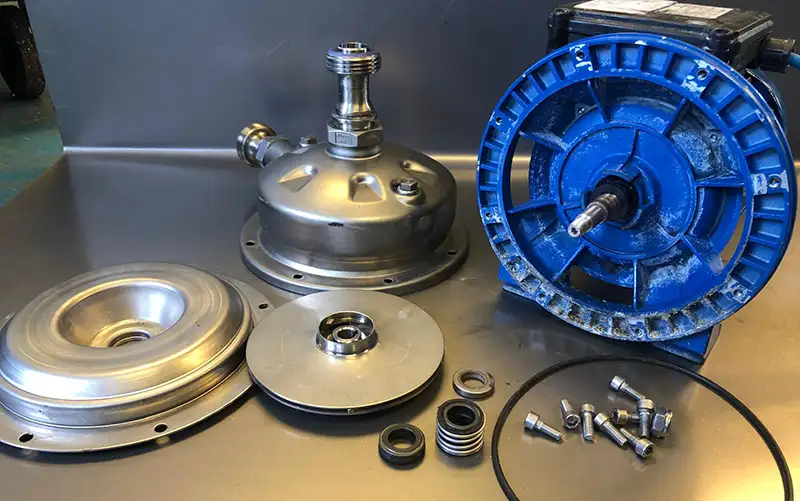
Centrifugal Pump Repair
Centrifugal pumps rebuilt to run smoother, quieter and longer
Centrifugal pumps are the workhorses of most sites, so they tend to get run until they leak or start shaking. By then the damage has usually spread beyond the seal. We strip them down, find out what’s really gone wrong and rebuild them properly.
What a Centrifugal pump does
A centrifugal pump uses a spinning impeller to throw liquid outwards into the casing. The casing, or volute, slows the liquid down and turns that speed into pressure, pushing it out through the discharge.
They’re simple, compact and handle high flow rates well, which is why they’re the most common pump in industry. You’ll find them moving water, supplying CIP systems, transferring chemicals, circulating cooling water and feeding process lines in food, brewing, dairy, pharmaceutical and water treatment plants.
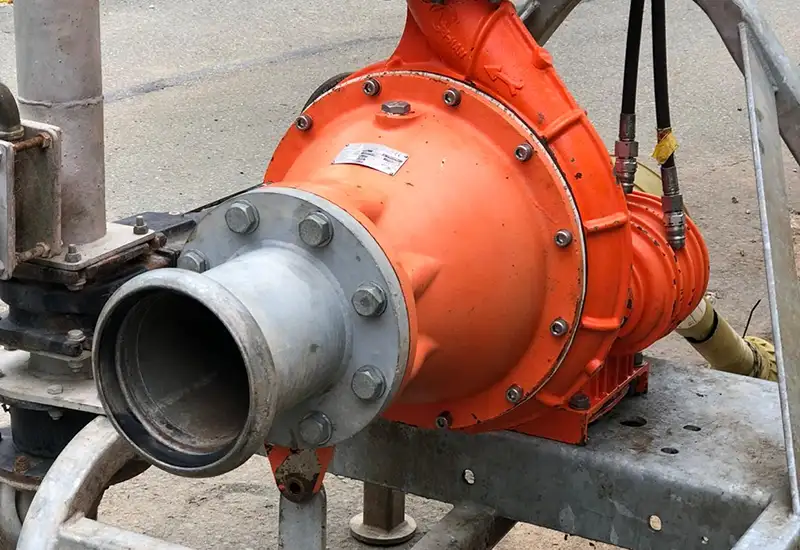
What goes wrong with Centrifugal pumps?
The most common faults we see are:
Leaking mechanical seals – The seal is usually the first thing to go. Dry running, running against a closed valve, abrasive solids and the wrong seal materials all cut seal life short.
Cavitation – If the pump isn’t getting enough liquid at the inlet, vapour bubbles form and collapse against the impeller. You hear it as a rattling, gravelly noise, and it leaves the impeller pitted and eaten away.
Worn impellers and wear rings – As the gap between the impeller and the casing opens up, liquid recirculates inside the pump. Flow and pressure drop and power use goes up.
Bearing failure – Worn bearings let the shaft move, which shows up as noise, heat and vibration and quickly takes out the seal.
Shaft and alignment problems – A bent shaft, worn sleeve or poor alignment with the motor causes vibration and repeat seal failures.
Corrosion and erosion – Aggressive or abrasive liquids wear away the casing, impeller and seal chamber over time.
Warning signs include leaks at the seal, a drop in flow or pressure, rising vibration or noise, hot bearings and higher motor current.
How we repair Centrifugal Pumps
Every centrifugal pump repair is a full engineering rebuild:
Pump stripped, cleaned and every part inspected
Shaft checked for run-out and replaced or rebuilt where needed
Impeller inspected for cavitation, erosion and corrosion damage
Wear rings, sleeves and bushes restored and clearances corrected
Bearings replaced
Casing and seal chamber cleaned up and repaired
Mechanical seals refurbished or replaced
Pump rebuilt and checked before it goes back
We’ll tell you what we found and what caused the failure, so it doesn’t happen again.
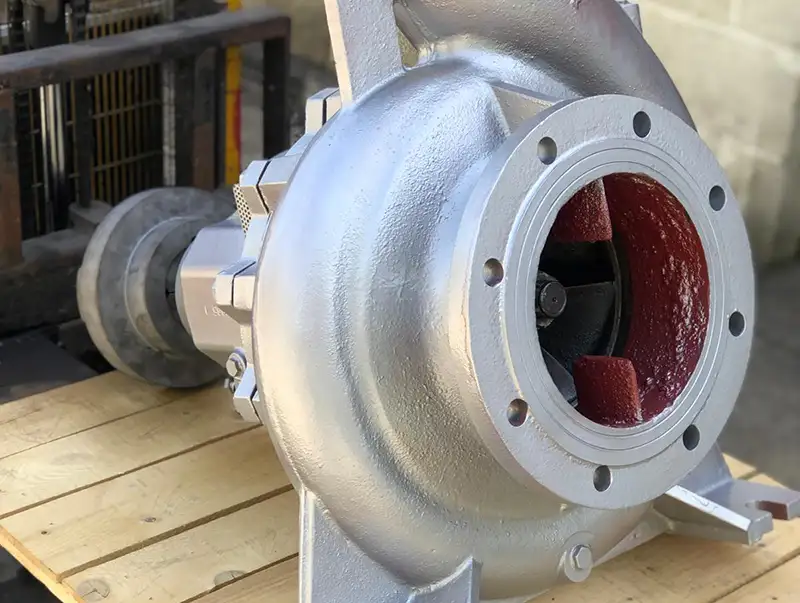
Why use RB for Centrifugal pump repair
We know seals inside out. We design, manufacture and repair mechanical seals ourselves, here in the UK. That means we can fit a seal that suits your liquid, temperature and pressure, not just the nearest standard part.
Upgrades that cut repeat failures. If a pump keeps eating seals, we can change the setup. That might mean a cartridge seal that is pre-set and harder to fit wrong, a double seal for hazardous liquids, a seal support system, or RB Diamond faces for pumps that run dry or handle abrasive liquids.
Gland packing conversions. Still running a packed gland that drips and needs constant adjustment? We can convert it to a mechanical seal as part of the repair.
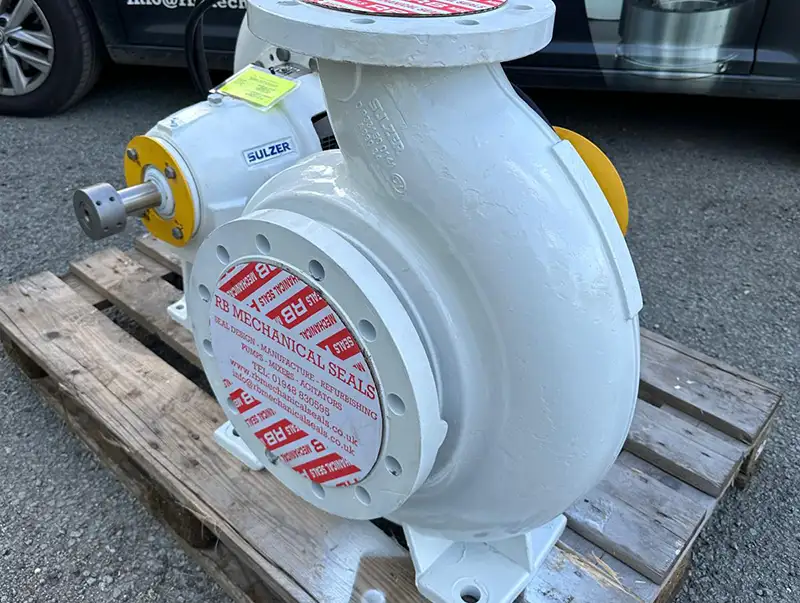
We tell you about the real cause. Cavitation, dead-heading and dry running are often system problems rather than pump problems. If we can see that from the damage, we’ll tell you, so you’re not paying for the same repair again.
Any make, any age. We repair centrifugal pumps from all the main manufacturers, including older and obsolete units. If the nameplate is missing, we work from dimensions and internals.
ATEX covered. For pumps in hazardous areas, we supply seals rated to ATEX Category 2, Zone 1 and Zone 21, so the repaired pump stays compliant.
Around half the cost of new. A proper repair usually costs around half the price of a replacement pump, with no pipework, base or wiring changes. If it’s not worth repairing, we’ll say so.
Talk to us
If your centrifugal pump is leaking, vibrating, losing pressure or has failed completely, get in touch. Send us the make and model or a photo, and we’ll tell you whether a repair or a full rebuild makes sense.